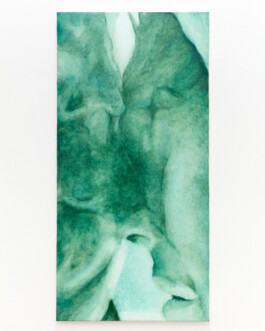
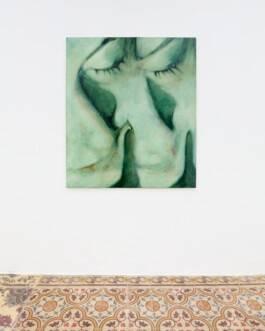
Dissociation is a psychological state of separation from reality among different aspects of consciousnes, such as memory, identity, emotions and perceptions. It serves as a protective or refuge mechanism. The spectrum of its manifestation is broad. Beyond the most common ones, such as losing track of time or getting distracted while driving or walking, dissociation is a survival tactic: a response to stress or trauma. It can thus be associated with disorders such as psychogenic amnesia, depersonalization and dissociative identity disorder. However, it can also manifest itself as a collective response to the bewilderment caused by global events including warfare, climate and political crises, identity and humanitarian crises, and therefore as a fracture, resistance or surrender to the power structures at play.
It is an altered state, subtle and imperceptible, whereby one is simultaneously present and unreachable, in a specific place and elsewhere: distracted, absorbed, absent. It is a disconnection from physical reality we live in, towards an imaginative dimension that postulates and creates multiple identities and perspectives: the image not as fiction, but as a component of the real. Dissociation is a functional and veridical act: a continuous oscillation between the surrounding reality and the imaginary, placing the sensation of the inner self as its center. Entering the gallery means dissecting one’s own brain to observe dissociative and traumatic states. The space transforms into a layering of thoughts and images, a distorted, muffled journey within memory, caught between intimacy and exteriority, recollections and suffering.
Here, private places and public spaces – recurring in several works as well as sounds, voices and reminiscences – are merged, forming an invisible and incommunicable bubble. Dissociation takes shape in our lived experience, blending personal events and global issues, generating new images that are the hazy product of a conscious post-production. Like an editing montage, it unites languages, desires and emotions.


Hanna Antonsson
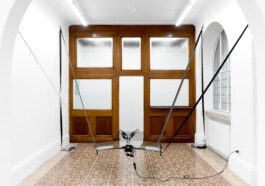
‘Auto Wing 19’
2026
Taxidermy Magpie wings, seatbelts, windshields, metal stands, servos
Variable dimensions
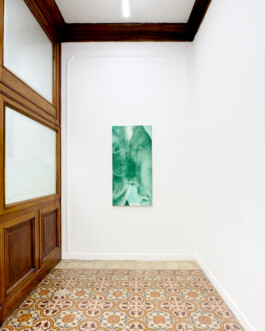
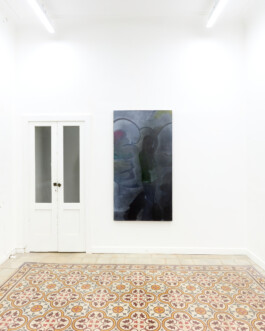
Ant Łakomsk
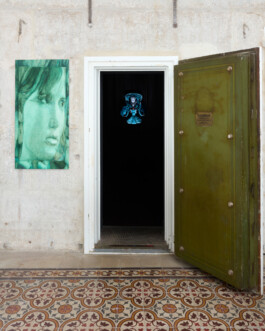
‘Zuzanna’
2026
Oil and shellac ink on canvas
170 × 90 cm
Inquire
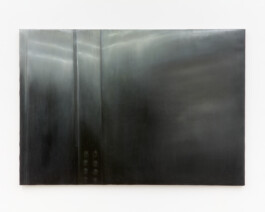
Polina Sokolova
‘Untitled IV’
2025
Oil on canvas
80 x 130 cm
Inquire
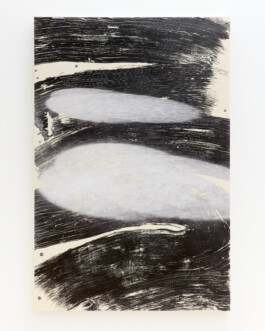
Tatjana Danneberg
‘Weekends and Beginnings'
2025
Pigment print, gesso, glue on canvas
150 x 100 cm
Inquire
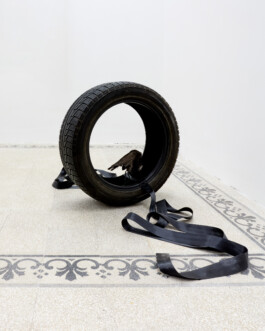
Hanna Antonsson
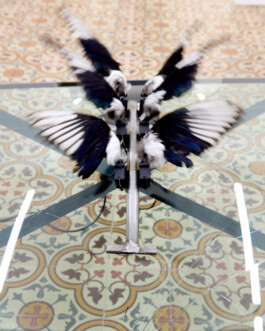
‘Auto wing 20’
2026
Taxidermy Jackdaw wings, car tire, seat belt, servo motors, arduino
Variable dimensions
Dissociation is a psychological state of separation from reality among different aspects of consciousnes, such as memory, identity, emotions and perceptions. It serves as a protective or refuge mechanism. The spectrum of its manifestation is broad. Beyond the most common ones, such as losing track of time or getting distracted while driving or walking, dissociation is a survival tactic: a response to stress or trauma. It can thus be associated with disorders such as psychogenic amnesia, depersonalization and dissociative identity disorder.
However, it can also manifest itself as a collective response to the bewilderment caused by global events including warfare, climate and political crises, identity and humanitarian crises, and therefore as a fracture, resistance or surrender to the power structures at play.
It is an altered state, subtle and imperceptible, whereby one is simultaneously present and unreachable, in a specific place and elsewhere: distracted, absorbed, absent. It is a disconnection from physical reality we live in, towards an imaginative dimension that postulates and creates multiple identities and perspectives: the image not as fiction, but as a component of the real. Dissociation is a functional and veridical act: a continuous oscillation between the surrounding reality and the imaginary, placing the sensation of the inner self as its center. Entering the gallery means dissecting one’s own brain to observe dissociative and traumatic states. The space transforms into a layering of thoughts and images, a distorted, muffled journey within memory, caught between intimacy and exteriority, recollections and suffering.
Here, private places and public spaces – recurring in several works as well as sounds, voices and reminiscences – are merged, forming an invisible and incommunicable bubble. Dissociation takes shape in our lived experience, blending personal events and global issues, generating new images that are the hazy product of a conscious post-production. Like an editing montage, it unites languages, desires and emotions.

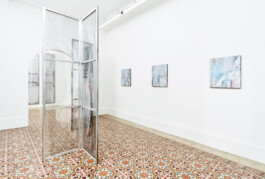
‘Incommunicability is itself a source of pleasures’, exhibition view
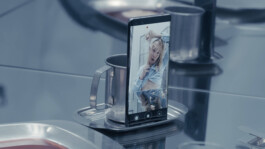


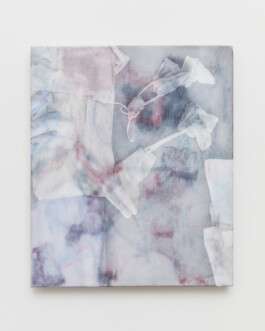
‘Ectoplasm (899Z)’
2025
Mixed media on linen
50 x 60 x 4,5 cm
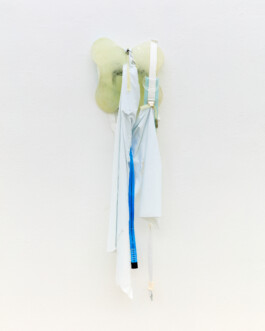

‘Ectoplasm (472Z)’
2025
Mixed media on linen
50 x 60 x 4,5 cm
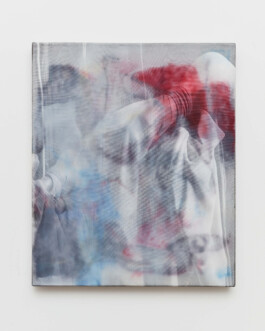
‘Ectoplasm (664Z)’
2025
Mixed media on linen
50 x 60 x 4,5 cm
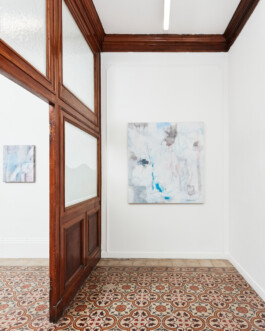

‘Ectoplasm (798Z)’
2025
Mixed media on linen
50 x 60 x 4,5 cm
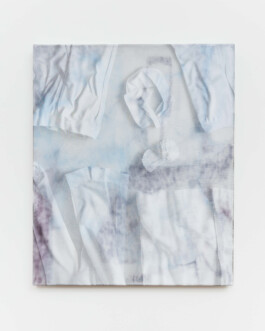
‘Ectoplasm (664Z)’
2025
Mixed media on linen
50 x 60 x 4,5 cm
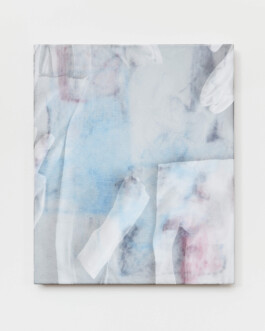
‘The eyes of the celestial body are white with black pupils,
like those of the two figures it overhangs in the purified land’
2024
Gesso, marble dust, pigments, acrylic, linseed oil on canvas
190 x 173 cm

‘They cannot be transmuted unless they are reduced into
their first matter, and then they are transmuted into another
form than that which they had before’
2025
Gesso, marble dust, pigments, acrylic, linseed oil on canvas
201 x 174 cm
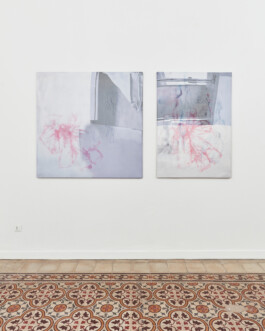
‘Ectoplasm (525Z)’ (left)
2025
Mixed media on linen
120 x 85 x 2 cm
–
‘Ectoplasm (518Z)’ (right)
2025
Mixed media on linen
120 x 120 x 2 cm
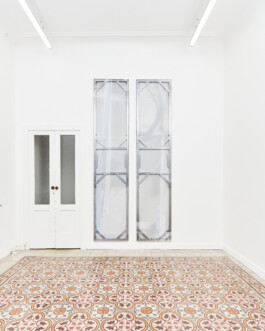
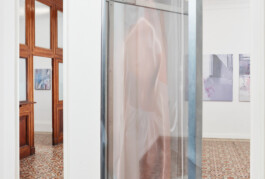
‘Enclosure’
2025
Aluminium, wood, digital print on silk chiffon
280 x 60 x 2,5cm
The Address
Via Felice Cavallotti 5
25121, Brescia
info@theaddressgallery.com
Wed – Sat, 15-19
or by appointment
+39 3336800755
Privacy Policy
Cookie Policy
Gallery
Via Felice Cavallotti 5, Brescia
Info@theaddressgallery.com
+39 333 680 0755
Opening Hours
Wed – Sat, 15-19